I wanted to thank reader Sully for sending a link to the Time Online article on the use of ketogenic diets and cancer treatment. The article is surprisingly well written and informative…I wonder if the author has a personal interest in the topic as the usual counter point, mainstream prattle was refreshingly absent. I guess that exposes a bias on my part…I’ll flesh out from where that bias arises on both an emotional and logical level later, but right now I want to point out a few nuggets in the paper. Before I do that, lets quickly review what ketosis is.
Ketosis In 100K Words Or Less
I could just say ketosis is a metabolic state the 99.9% of doctors and registered dieticians CAN NOT ACCURATELY DEFINE OR DESCRIBE, but that does not help much as to details and mechanisms now does it? Ketosis is the state in which glucose is relatively limited or lacking as a fuel and cells begin to use fat as a primary fuel source. Not dissimilar to the formation of lactate from glucose, ketone bodies are the incompletely metabolized remnants of fatty acids. Ketones have the interesting characteristic of being water-soluble and thus are capable of passing through cell membranes, including the blood brain barrier. This is handy since the brain does need SOMETHING to run on and if glucose is in short supply, ketones work remarkably well, in fact better than glucose in nearly every conceivable way. That is a brief run down on ketones, if you want to geek out on the topic you need to read Dr. Eade’s post on ketones. I really want to emphasize the point that ketosis is a normal metabolic state. I’ wager THE DEFAULT metabolic state in humans but this is going to be a long enough post without that side diversion. So, back to that link to the Time article! Here is the main point I want to make from that paper:
“…we are only allowed to enroll patients who have completely run out of all other therapeutic options.” That means that most people in the study are faring very badly to begin with. All have exhausted traditional treatments, such as surgery, radiation and chemo, and even some alternative ones…”
I guess my point is actually a question. WHY? Why are the sickest people, who have exhausted every conventional option, many of which are VERY dangerous, why is a safe nutritional intervention handled like it is an atomic bomb? Theories concerning the potential of a limited carbohydrate diet as a cancer treatment have existed since the 1960’s. A few animal studies exist on the topic and a one or two human trials…but this potential therapeutic intervention has been avoided like the plague. This is just baffling, especially when we look at the “safety” of modern chemotherapeutics.
Chemotherapeutics: Toxic is better!
To understand what scientists are looking for with regards to chemotherapeutics you need to understand a few of the mechanisms underlying cancer. Very generally cancer has an initiation phase, typified by damage or changes to the DNA, a growth phase in which otherwise well-behaved cells begin to push out against other tissues, and finally spreading or metastasis in which cancer can disseminate throughout the body. Keep in mind this is a generalization and does not describe all cancers or scenarios.
Many chemotherapies target the DNA of cancer, either preventing the replication or actually attempting to damage the DNA to such a degree that apoptosis (programmed cell death) occurs. In one case specific enzymes involved in the DNA replication process are the targets for chemotherapeutics. The premise being: stop all cellular replication and you stop cancer. This works…kind of. Unfortunately cancer is enough like us that drugs that stop “IT” from replicating also stops stuff like our gut lining, hair and other goodies from replicating. This is where folks loose their hair and shed their intestinal and mouth linings after the use of folate blockers like Methotrexate. Did I mention that folate (folic acid) is a potent up-stream PREVENTION of DNA damage and CANCER formation? Yep, one of the mainline defenses AGAINST cancer is a drug that not only causes you to shed your GI lining, but it also disables one of your primary systems for preventing FUTURE cancer.
A second class of drugs goes right to the heart of the matter. Drugs like Cisplatin actually DAMAGE DNA! These substances rate remarkably high on the AMES test. The AMES test, developed by Bruce Ames, is a measure of the mutigenicity of a given substance. In simple terms is how much DNA damage a substance can be expected to exert in a living system. If you recall from above, rapidly growing things require loads of DNA synthesis. If you want to kill something, why not destroy the DNA? It’s a great idea, but then again you are subjecting people to a substance that is KNOWN to promote cancer formation. Mutagens are typically CARCINOGENS.
A third class of drugs attempts to stimulate apoptosis of cancer by disrupting cellular stability. Paclitaxel (Taxol) is perhaps the best known of these drugs and acts on the microtubules. The theory again, is that rapidly dividing cells will be preferentially targeted in this process.
The real problem with all these approaches, and in fact the major thrust of cancer research is that cancer is US. It is not a foreign invader; it is a modified version of us. How do you kill just a little bit of yourself? This is one element of the problem facing cancer research and this may be born of our success with antibiotics. Prior to penicillin, death from pneumonia and simple infections was horribly high. Folks just do not remember this and few people appreciate how powerfully this affected the collective psyche of medicine. People who otherwise would have died are now saved with a pill. Unfortunately the magic bullet has never materialized in the case of cancer.
By now you may be thinking: “OK, Robb needs to cut back on the Americanos and chill out! I mean this is SCINECE and MEDICINE! This stuff must be helpful to someone despite the ominous spin Robb is putting on this…” Well…despite the fact that the “War On Cancer” was declared in the 1960’s things have not improved…at all. Don’t believe me? We will look at some statements from the medical establishment itself. In a few instances some cancers are much more effectively treated than they were 30 years ago. Unfortunately this is the exception, not the rule and all this while cancer rates in total have increased. Much of the supposed success trumpeted by researchers and drug companies is an outgrowth of improved imaging and diagnostic techniques. This has simply shifted the time people know they have cancer forward but it has done little to improve actual survival. People are also being diagnosed with “cancer” when it is pre-cancerous tissue that may or may not ever advance into full-blown cancer. It does wonders for survival statistics to diagnose and subsequently “cure” folks of a disease they would never have died from.
From JAMA
Are Increasing 5-Year Survival Rates Evidence of Success Against Cancer?
H. Gilbert Welch, MD, MPH; Lisa M. Schwartz, MD, MS; Steven Woloshin, MD, MS JAMA. 2000;283:2975-2978.
You can read the abstract here but I’ve pulled out the results and conclusion for a closer look:
Results From 1950 to 1995, there was an increase in 5-yearsurvival for each of the 20 tumor types. The absolute increasein 5-year survival ranged from 3% (pancreatic cancer) to 50%(prostate cancer). During the same period, mortality rates declinedfor 12 types of cancer and increased for the remaining 8 types.There was little correlation between the change in 5-year survivalfor a specific tumor and the change in tumor-related mortality(Pearson r=.00; Spearman r=-.07). On the other hand, the changein 5-year survival was positively correlated with the changein the tumor incidence rate (Pearson r=+.49; Spearman r=+.37).
Conclusion Although 5-year survival is a valid measurefor comparing cancer therapies in a randomized trial, our analysisshows that changes in 5-year survival over time bear littlerelationship to changes in cancer mortality. Instead, they appearprimarily related to changing patterns of diagnosis. Emphasis mine.
Like I said above, all that is happening here is folks find out they have cancer sooner and begin treatments that appear to do nothing. The high carb, low fat diet is perhaps the only instance I can think of that has this type of society wide paralysis or selective memory occurring. Imagine a sports team or legitimate non-governmental business trying to run for 30 years with nothing to show for it’s efforts but failure. Amazing.
There IS awareness within the medical establishment that our present course is not working, it just continues to be ignored. This piece from the Journal of The Royal Society of Medicine came out in 1991 and has it mostly right. Even these folks were duped by the colon cancer/fiber shtick. The whole text is available and the paper is actually quite good. The authors make the point that our understanding of the molecular underpinning of cancer has exploded; yet this has translated into few advances in treatment or survivability. The authors also make the point we have plenty of information to make lifestyle and environmental changes that will dramatically reduce the OCCURANCE of cancers. Aside from smoking little effort has been placed in the prevention category. The author makes the telling prediction that if we attack the “Western Diseases” we will see a dramatic improvement in health and consequent reduction in cancers…I suspect however the solution would be a low fat, heart healthy diet! The low carb solution is ignored again and the researchers fumble about for another 20 years looking for the solution that is sitting in their laps. Oy vey!
I want to briefly look at the therapeutic potential of a ketogenic diet, possibly with adjunctive techniques such as caloric restriction and intermittent fasting. My interview with Dr. Thomas N. Seyfried of Boston College on the topic of cancer, ketosis and metabolic control analysis is a good place to start. A google or pubmed search for ketosis or ketogenic diet will generate some interesting returns.
I want to make the point that I do not think ketosis is the cure for all cancers…but it might be for some, for others it may dramatically slow progression and all without the dangers inherent in modern chemotherapeutics. The point must be made however that preventing a disease is much easier than treating a disease…what if periodic bouts of ketosis/fasting or caloric restriction could dramatically reduce the occurrence of cancers? There is much to be learned here but no one is much interested due to the lack of money to be made from a low carb diet vs. drugs.
Personal bias
Now, it may be obvious that I have a pretty strong bias on this topic. Some of this I’d like to think is the result of being a critical thinker, looking at the data and empirical evidence and drawing sound conclusions. I worked in and around cancer research for quite some time and I have my leanings towards evolutionary medicine and the notion that an ancestral diet is likely the best one for optimum health. That’s all the intellectual bias I bring to this topic. My emotional bias started on January 4th, 1988 when my girlfriend, then 16 years old, died from complications due to an astrocyte brain tumor. Her name was Stacy Barnett, she was class president, a cheerleader, 4.0 student…and a pretty damn cool chic. She was first diagnosed with a brain tumor at the end of 8th grade and was not expected to make it to the 9th grade. Her cancer went through 3 different remissions before the final growth that started in Oct, ’87. Astrocyte brain tumors are thought to be particularly responsive to ketosis. 15 years later I can only wonder if a ketogenic diet might have saved her life. I’d like this information to be more available and better researched…I’d like simple, safe interventions to be considered in preference to approaches that are known to be both dangerous and ineffective. I don’t think that’s an un-reasonable desire.
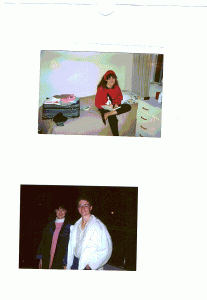
In the photo (scanned, sorry for the quality) you see Stacy at Children’s Hospital at UCSF. She has her trademark scarf that covered the bald spot where the first surgery removed the tumor. In the other photo we are headed to the movies. Stacy was on high dose prednizone in an attempt to reduce the swelling caused by the re-growing cancer. She HATED how the prednizone made her cheeks puffy.


I remember JV Askem went on a zero sugar, and maybe a zero carb diet before he died in an effort to stave off his brain cancer.
I’ll have to dig around to see if I can find it.
Shaf-
JV went sugar free but he still had whole grains in the mix. I emailed him about the potential of a ketogenic diet but never received a response. In the Times paper they mentioned some folks who improved on the diet, others experienced no direct benefit. It is thought however that a KD with calorie restriction and or intermittent fasting is more effective than a ketogenic diet alone. JV was a great guy…I never got up to Squim to train with him despite living in Seattle.
Robb
Hmmm particularly relevant right now Robb. Very nice post.
Very helpful and sad post Rob.
The most sobering thing I read about all this was in the Male Pattern Fitness blog. He said: ” It reminded me of a really sad story from a few years back: An acquaintance was diagnosed with cancer, but rather than going through chemotherapy, decided to “heal” his body with a macrobiotic diet, all fruits and vegetables with little protein or fat. The cancer took him in what was probably record time. If this theory is correct, he was right about diet being a weapon against his cancer. But he was dead wrong about the diet he chose.”
I put some more on this on my blog:
http://conditioningresearch.blogspot.com/2007/09/ketogenic-diet-and-cancerold-news.html
Chris-
The ketogenic approach is counter to just about everything we hear about. From the GOV to pesky vegetarian doctors. Things will shift eventually…I hope!
Great Site BTW
Robb
Pesky vegetarian doctors
Really… Fruits and vegetables will always be healthier than a paleo diet
Stop trying to sell books and look at the facts… Please
“macrobiotic diet, all fruits and vegetables with little protein or fat”
No fruit whatsoever is consumed in a macrobiotic diet, the amount of vegetables isn’t very much either.
Robb,
Thanks for another great article. I’ll be sending it along to some of my mom’s friends who have cancer. The ‘establishment’ will pick this stuff up in a few decades like you said.
According to the keto-test strips anyway, I’m currently in ketosis. Been keeping carbs to a 30g ceiling daily and only vegetables, 1/2 cup fruit. Could I make this the new ‘normal’ and stay on it indefinitely?
Rob-
I believe so. I have dipped in and out of ketosis for years (testing with keto strips occasionally). The folks who wrote Lights Out recommend going keto something like October through June (for the northern hemisphere. Fall through winter) so a significant protion of the year. This is one of the things I’ve tried to reconcile with regards to performance and training…how much high intensity activity can a ketogenic diet support? Results appear to vary!
Robb
Does anyone have experience with curamin? Any insight on the good, bad, or ugly would be appreciated. Thanks in advance.
No clue on the Curamin. I suspect it is a curcumin extract. I really like Zyflamend from New Chapter.
Robb
Robb- I know you are too scientific for this game but T.S.
You’ve been tagged. Here’s the info. http://coachrut.blogspot.com/2007/09/jen-made-me-do-it.html
Best,
Rut
LOL! Ok, but just to clarify…is that 5 things you don’t know about me or 5 things I don’t know about me?
Ok, here tis:
1-I met Axl Rose in a strip club (7th Veil) on Thanksgiving day 1991.
2-I strongly dislike touching dirty windows.
3-Nicki’s sister kicks my ass at chess and checkers.
4-I have eaten dishes prepared with several types of reptile, rodent and insect in Mexico and SE Asia.
Ahem….I only count 4 things there…
Back to the topic though:
I thought I recalled there was some discussion on how long a person should stay in a ketogenic state? Is there any time limit at all or is this more related to the individuals lifestyle? Obviously if you are trying to recover from cancer I don’t think beating your PR in Fran or something is at the top on your list of things to do. But for others like amateur/recreational athletes? Things then change if you are talking about the health/longevity bias too.
Allen-
No limit that I know of.
Robb
Hi Robb,
I’ve been following your writings for some time. but have never commented till now.
I’ve learned so much from you, and appreciate your sharing so much with us.
I’m passing along this link to a physician client of mine who has renal cell carcinoma.
Best,
Coop
Coop-
Glad the information is valuable. keep me posted on your friend.
Robb
Hi Robb,
Good stuff. However, I wanted to add a note of caution. Unlike adult cancers, chemotherapeutic agents have proven remarkably effective against most childhood cancers–many of which now have cure rates upwards of 90%. As I understand it (simplifying), the reason for this is that standard chemo agents interfere with quickly reproducing cells. The assumption is that cancer cells reproduce more quickly than normal cells. It turns out that this assumption is not so good when it comes to adult cancers, but does accurately characterize most childhood cancers.
Marc-
Great to hear from you. I’m going to copy your comment in another post and expand on things a bit.
Robb
Rob
another related study just reported:
http://conditioningresearch.blogspot.com/2007/11/more-on-low-carb-diets-for-treating.html
Chris-
Thanks Amigo! Great link as always.
Robb
Hi Robb,
Just found you through this link I posted on the CF boards:
http://board.crossfit.com/showthread.php?t=23875
I’ve got a lot of reading ahead, but I wanted to say “Thank you!” for writing this. I’ve been wandering aimlessly until now.
Robert-
Thanks for the kind words but that’s a lot of pressure! I do a lot of aimless wandering!
Robb
I enjoyed the linked article for a number of reasons: a ketogenic diet may be responsible for the success I have had in dealing with my own cancer, the study is being funded by a food company that has a stake in the outcome of the study and soy products are being used as a protein source (can you imagine feeding soy to a cancer patient?). Something else caught my interest: many of these terminal patients couldn’t give up the sweets.
Thank you for posting this. It’s helped me make a choice that I think is right for me. Hope to post again, with a report, say, in 90 days.
Laurie-
Please do keep me updated.
Hi Rob
Vary interested in your post of cancer and ketogenic diets since my Dad has cancer. He had primary Liver cancer, which is unusual since he hardly drinks and doesn’t have a Liver disease, and now has secondary cancer growths in the Obmentum ayear after his operation to remove the Liver cancer
He had the original Liver cancer removed along with his gall bladder and 2/4 of his Liver. My question is can he still go on a ketogenic high fat diet without a gall bladder as the Doctors say he should avoid fatty foods since he doesn’t have a gall bladder to make bile. Are they correct or can he use good fats over bad fats and still follow a keto diet. We live in New Zealand so all our meat is grass fed if this makes a difference.
He started chemo this week and I am looking for some sound advice to help his battle as they have caught the cancer early, albeit the prognosis still isn’t great.
Thanks
Mike
Mike-
Can you get me the exact type of cancer? Like Hepatoblastoma…this can help me figure out how much help ketosis might be. In short he could still do a ketogenic diet unless his liver function is impacted. He would need to take oxbile to help digestions.
The gall bladder serves a very important function in digesting fat Robb. I don’t expect you to publish this comment (in fact, I’d advice against it because this is a personal appeal to you) but I would be more careful about your responses to very serious medical problem. Please do publish my other response to Mike (below) as I think it may help him as well as your other readers. Also consider editing your comment to Mike as I don’t want your readers to make any decisions that may endanger their health.
Take care buddy!
Yes, Indeed it is and I advised the EXACT thing you did. We worked with a girl who had advanced metastatic melanoma which had infiltrated her liver. Her doc was game to monitor her liver function and implemented a ketogenic diet. She lived significantly longer than average and the doctor has since integrated ketosis into his practice…so what great insight am I missing and you are offering here?
The gallbladder holds on to bile and collects it for dumping all at once. You still make bile if you don’t have a gallbladder. It just takes you a while to adjust to it not being there. I have not had mine removed but have spoken with people who have, and what happens is eventually the bile duct enlarges to sort of mimic the bile-dumping action (obviously, it will never be exactly the same).
Also, how you respond to fats when your gallbladder is missing depends on what kinds of fats you eat. Coconut oil, for instance, isn’t particularly bothersome because it’s medium-chain triglycerides and your body breaks those down pretty easily. It’s the long-chain TGs that cause GI issues. But again, once your bile duct adapts, a lot of that goes away.
I’m sorry to hear that Mike. If your father had his gall bladder removed then your doctor is right, eating high fat is not advised. Furthermore, I believe the liver has a function/role in removing the ketones/acetone from the body. If this is the case, then your father may have additional load that may be too much in his current state. The gall bladder issue seems to a be serious one regarding a ketosis diet working as it requires a 4:1 ratio (or around that) of fat to protein. In addition to stomach discomforts, he may suffer from very loose stool and numerous other ailments if he does decide to proceed. Furthermore, it may put him at risk of colon cancer (though I have nothing to cite to for this). Such amounts of undigested fat in your stool is not healthy for your colon.
Disclaimer: I’m not a doctor or in the medical profession. I HIGHLY advise you to consult as many physicians as you can to see what their opinion is on the matter. Best of luck to your father and definitely tread with caution.
SA-
this is different from my recommendation HOW?
Thanks, for the reply. I will find out the exact type of cancer soon, however, the docs say the Liver is functioning fine and his berrilium level is good. His biggest problem is extreme itching and feeling very cold especially at night, even though it is summer here. He isn’t running a temperature and the Docs don’t know why he is itching so much. Could it be bile salts under the skin due to no gallbladder?, although I suppose it could be the chemo or cancer. He has cut out a lot of carbs, has 3 tsp of fishoil + regular oily fish but hasn’t stoppd the morning porridge aaaargh. I was thinking perhaps he should increase his fat intake if the bile salts are building up but I’m not sure
Any news about studies on effect of ketogenic diet on cancer?
There is now a body of work by MP Lisanti where he is promoting the idea that Ketones are ‘super-fuel’ for cancer. His model is mainly breast cancer. I have started to slog through this literature. Be interested in your take.
I would not be surprised if there are cancer variants that do better on ketones, but it would be news to me.
Jimmy Moore jumped on the Ketone fueling story already….
http://www.livinlowcarbdiscussion.com/showthread.php?tid=5657
Jeff-
Did you notice that my post pre-dates Jimmy’s by over a year?
Hi Robb – you probably don’t remember but a couple of years ago I asked you about the Budwig diet re cancer as I had been diagnosed with malignant fibrous histeocytoma of the sphenoid none and you pointed me in the direction of the ketogenic research and Dr Seyfried. I contacted him and he was very helpful.
Just wanted to say 2 1/2 years after diagnosis and having turned down radiotherapy I am still going strong much to surprise of my oncologist. The tumour is still there but not doing anything. I mix my diets, but primarily lo carb / paleo with a little Budwig and some intermittant fasting. Also work on managing stress with exericise and meditation. I’m 2 1/4 stone lighter than when I finished chemo. An ex work colleague of mine said seeing me again was like watching the Curious Case of Benjamin Button. Also despite a discectomy at L5/S1 in October last year I am finally back to consistent Crossfit training.
Thanks for input as it has influenced my nutrition and I believe my current good health
Awesome stuff Paul! If you;d liek to write this up in the hopes of helping other folks I;d love to have it on the blog.
I would love to. It’s something I’ve been meaning to do for a while. Should I just email it to you. What sort of word limit would you want?
Less than 10^23
I’m on it. Could be a while if I let it get that long!
Robb,
Thanks for the great post. My mom had melanoma (treated and cleared 3 years ago) and now is concerned they may have found cancer in her salivary gland. Is a ketogenic diet appropriate here?
I am getting her started on the paleo diet with the help of your book.
Thanks for your time and effort,
merm
It’s how I’d do things, you guys have to make that decision as best you can.
Hello Rob
Thanks for all this great information.
I have been on a very low carbohydrate diet for 4 years now…but not as it relates to cancer. I have found it to be extremely effective as I am in the fitness industry and it has allowed to remain muscular and very lean (about 5%-7% body fat) year round…without have to do hours and hours of cardiovasular exercises to burn fat.
HOWEVER…I have found that with this diet has come the following:
1). Less strength in weight lifting exercises.
2). Less energy / stamina (primarily during exercising activities)
3). I developed large kidney stones in BOTH kidneys.
4). Over the last year I have developed what appears to be symptoms of arthritic in my spine.
In doing research I have run across many articles that seem to suggest that these “low carbohydrate diets” are so extremely acidic that they “open the door” for many diseases including arthitis and cancer.
In addition there seems to be a growing trend towards alkaline products..ie. alkaline waters (for the very purpose of reducing the acidity in the blood).
By the way….I eat lots of meat, eggs, chicken, cheese, and drink about three cups of coffee per day.
What are you thoughts on this….do you think I need to look at adjusting my diet to remain low carb but just find more healthy low carbohydrate food alternatives? Also, in your research have you been able to confirm or debunk the idea that keeping the body in ketosis (long term) is tied to these other symptoms I have been experiencing?
Thanks!
Drew
Of course you will have low strength and energy on a ketogenic diet. Low body fat and high performance output require different dietary needs, specifically post workout. Robb has talked about this a lot here is an article from 2008 http://www.robbwolf.com/2008/11/03/post-wo-nutrition/
If you adjust your pre and postworkout nutrition you should be able to get better performance without sacrificing body composition. If you want to say at <7% body fat consistantly an intermitten fasting regiment like at leangains.com might be something that is more sustainable.
The kidney stones could be explained by the coffee, and maybe you respond poorly to dairy.
I have been struggling with my weight loss for years cause I’m a weak muthaheffa and I jump off the wagon at the slightest provocation (or during extreme stress, which also happens). This time around I went back into ketosis and NOTHING WAS HAPPENING. The sticks were purple, but no weight was moving.
I got fed up and went all-meat with the exception of my coffee and some coconut and olive oil (and coconut milk in the coffee). Then gradually reintroduced nonstarchy veggies. No dairy. No nuts. No nothing like that. Now the weight’s coming off. Go figure. I don’t restrict fat, but I don’t go out of my way to eat it–no fat bombs or anything. I figure I’m getting plenty from my own reserves.
I haven’t tried reintroducing dairy yet but it’ll be interesting to see what happens. All I know is that I normally have a little more energy when I’m low-carbing but I’m not bouncing off walls or anything. This time around I’ve been rearranging rooms, putting a Sauder desk together that was particularly heavy and maddening, and building bookshelves. Also doing more chores than usual–normally, the state of the house overwhelms me and I quit after one or two jobs. I am female, about 5’6″-5’7″ and when I looked this morning, was hovering around 205. I fully expect to be back in the 190s in another week or two–and probably ready to run laps as well, something I have *never* wanted to do, not even when I was slender.
So yeah. You’re probably still eating a wide variety of foods but it might help you to do an elimination diet to see if something in particular is aggravating you. I don’t buy that ketosis causes low energy. How in the world did our ancestors hunt in the winter if that was the case?
Know I’m a bit late replying to Drew’s comment but he should eliminate the coffee or at least drop down to 1 cup a day as coffee is very acidic — up his water intake and mix/alternate some greens (raw salad greenery) in with all that protein. Try 2 teaspoons of ACV before bed too — put in a shot glass filled with water it will help kidneys and liver.
I stumbled across this post becuase a family member was recently diagnosed with cancer. I also found a comprehensive review of CHO restriction for treatment and prevention of cancer here http://www.nutritionandmetabolism.com/content/8/1/75 for anyone else that is interesed in treating and preventing cancer with REAL nutrtional information instead of the misconception to “avoid red meat”.
Hi Robb,
I have been diagnosed with an Oligodendroglioma Grade II brain tumor and have already been through Chemo and Radiation Therapy with only stopping the tumor growth and no reduction.
I have recently begun the Low Carb High Fat (LCHF) diet (ketosis.)
I won’t know anything about the current size of the tumor until my next MRI (the beginning of March 2012)
I do know that before the diet I was having daily headaches. After starting the diet five weeks ago, my headaches have disappeared which makes me think it is doing something good in my brain. I am very hopeful that it has started apoptosis of the tumor. I will return to this site and keep you informed of my tumor regression to this diet as time progresses.
Please do keep us informed, Randy. Best of luck to you!
Had my last MRI on 4/2/2010 tumor appears same as before (no growth) my neuro-oncologist stated most of what we see on the MRI now is scarring from the Radiation Treatment. As long as there is no growth I am a happy man.
I have stayed on the diet and still having very few headaches, none as bad as before. I have lost a total of 24.5 lbs since starting the diet on 1/2/2012. There was one bad day about the third day of the diet when I was switching to ketones where I felt like crap, my mind was in a fog and generally felt lethargic.
Now I feel great and have more energy, I am sure in part due to the weight loss. I plan on staying on the LCHF diet indefinitely.
I will try to post as time goes on and keep my condition updated.
Randy
Keep us posted.
OK now it has been almost 10 months on the LCHF diet (9/28/12). Still feeling great with few headaches. Last MRI 8/20/12 shows no growth and my Neuro-oncologist stated that the area we are seeing could just be scar tissue from my radiation treatments.
Time will tell and I will keep reporting my results as time goes by.
Randy
Correction on my post from 4/8/12 I stated my last MRI was 4/10/10 when it should have been 4/10/12
I forgot to mention that I had a complete physical with bloodwork last month and my total cholesterol has decreased from 215 down to 190
Hi,
I was already a follower of your website. I was moved by your “convince people”-post. Love the new Eat Real Food! A few weeks earlier I named my faceboodpage RealFoodGirl, isn’t that weird? I am a dietician, not a regular one, don’t work in the field, but was/am determined to do more with Real Food and Paleo. My diagnosis and other business delayed my pursuit of RealFoodGirl.
Breast Cancer, infected lymf node. No further metastasis. (that’s not right, right? Metastases?). Anyhow, starting chemo this friday. Already Alternate Day Fasting, although I’m switching today in order to fast 48 hrs prior and 24 hrs after. Also keeping my sugars low. I don’t count. Maybe I should, it’s a lot to handle, all the things we’re managing. Goes on the never ending list.
Is there information on ketosis and breast cancer? I do have info about the Valter Longo experiments, that’s why I fast. But ketosis might be a reason to further reduce my carbs on eating days.
Thank you and the best to all cancer-fighters above
I’m extremely impressed with your writing skills as smartly as with the layout in your blog. Is this a paid theme or did you customize it yourself? Either way stay up the nice high quality writing, it is uncommon to see a great weblog like this one these days..
I came across this article and was excited to see another great use of ketosis. I personally have lost a large chunk of weight doing ketogenic paleo. I personally think that staying in a permanent state of ketosis is probably not necessary for optimum health but I think periodically dipping into ketosis either by going low carb or intermittent fasting is great for your long term health. I also wonder If people who tend to have problems with low carb ketogenic type diets haven’t just damaged their liver to much eating refined sugar and other crap. I really wish science was on the same page as the rest of us so we could get more of these questions answered.
Robb,
I’m not sure if you still get notified about these wayy old posts, but I’m doing some reading up on cancer and diets for my uncle, who just had a chunk of his Pancreas removed due to cancer. He’s waiting on results, and will likely go on chemo soon. I immediately thought he ought to start a paleo and possibly a Ketogenic paleo diet; hence I’ve ended up on this page. If you could point me towards any research or info on Keto diets and pancreatic cancer I’d be greatly appreciative. Anything that might help convince people to give it a try will help. I’m hesitant to tell others what to do, but I can’t in good conscience let this pass without trying to get him on a keto diet…I mean there are almost NO downsides.
Thanks,
John
“Some of this I’d like to think is the result of being a critical thinker, looking at the data and empirical evidence and drawing sound conclusions.”
Winning.
Hi,
Would it help matastatic liver cancer (primary in colon)?
If liver is badly effected will it be able to make the keytones?
If the patient is weak and seriously underweight will he have the strength to convert to ketosis?
Thank you,
I have the same question with Ken. Is the liver badly effected when producing ketones, if the patient has a liver cancer? I really wish for an answer as my dad has been eating Ketogenic diet for 2 weeks and he has liver cancer and his situation is getting worse 🙁
I had primary colon cancer with secondaries on my liver. Throughout my treatment I kept to ketogenic diet. Came through chemo, liver operation (60% removed incl gall bladder ) and finally surgical removal of what remained of colon tumor. Still cancer free after 2 yrs but back to eating more carbs now. Staying away from sugar and wheat as far as possible and ready to go back to Keto diet if cancer returns. Hope this helps. I am male 66 yes old. Didn’t have any trouble Adjusting to the diet at any stage but used some discretion in first few days after what were two major surgical procedures.
Thanks for writing this article as it gave me pause for thought.
Its just an observation but when I visited my Mom in a seniors home before she passed I noticed that there were virtually no obese nor overweight folks in this home.
I’m not wondering if people who’s diet through out their lives that was more protein based rather than carb based kept them thin all their lives and while not realizing it, eating this way may have actually extended their lives.
High carb diets = overweight or obese= diabetes, hip and knee surgeries, high blood pressure, a higher rate of cancers and all the known proven health problems related to being overweight.
We should call it Carbweight.
There are very few even moderately overweight people over 80 years old, Look around.
You never saw a fat Eskimo and they had zero access to any carbs through out their long lives.
It’s only when they were introduced to twinkles, alcohol and the like that their incidence of diabetes skyrocketed in the 20/21st century lowering their average life expectancy to unacceptable levels, not unlike it has our’s.
Thanks for allowing me to comment.
How long does a patient who is trying to “starve out” cancer need to stay on this diet? Or is this a life change one must make?
Professor Seyfried’s work indicates a few months of low calorie+ ketosis. Keep in mind, ketosis may be beneficial for some cancers, possibly harmful for others. Thomas Seyfried of Boston University is the guys to follow in this.
Robb:
Just stumbled upon this site & podcast…33 yrs old and just learned recently the mole removed off my lower back is melanoma in-situ. I’ve only had a chance to read a little of your stuff, Robb, but I’ve come across a couple things where you’ve mentioned ketosis & melanoma may not be a good idea; yet, I haven’t been able to learn why. Care to elucidate?
In the meantime, I’ll take a look at Tom Seyfried’s work you just mentioned. I’ve been low carb (<50 grams/day) for about 2 years now and have no idea if it helped or hurt the melanoma.
Appreciate your work I've stumbled on thus far.
-Chris
chris-
Some indications that ketosis will embolden (make more agressive) melanoma…but it’s all veyr murky information, nothing solid as yet.
Hi, Robb. Any links for the information that ketones might “embolden” melanoma? I’m struggling to find anything on pubmed
Hi Robb, also interested to hear if there’s been any advances on this (Keto + Melanoma). An article published earlier this year https://www.eurekalert.org/pub_releases/2017-01/ehs-mml011017.php suggests that melanoma will actually grow faster in response to a high fat diet. Is this along the lines of what you were suggesting here back in June 2013? If so do you think keto may be beneficial in the prevention of melanoma, but not in the treatment? Or could a ketogenic diet also increase the chance of melanoma forming in the first place? Thanks in advance,
Hello Robb,
My father in law has been diagnosed with a large primary liver cancer tumor. I want to give him some tips on what to do with his food, can you help me out? Besides the cancer he’s got hapatitis B.
He loves rice so I was thinking to do it the RS-way, cooked and cooled, what do you think about that?
hope you can provide me with some usefull tips!
best,
saskia
I have follicular lymphoma which is currently being managed by 4 weekly intravenous treatments of ritxumab and bendmustine (6 cycles) due to complete in November, followed by 2 ritxumab (Dec & Jan) then bi monthly maintenance programme of ritxumab for 24 months.
I previously followed a ketosis diet but have been advised against it until treatment is completed, however I feel unfit, unhealthy, sad I don’t know if depressed would be the correct word to use) and desperate to get back on a keystones diet to improve my mental state of mind as well as my physical well being.
Any positive advice would be gratefully received.
Kind regards
Caroline
I wish I had more than just: sleep, eat and exercise as well as you can given your situation. Please keep us posted.
Hi Robb,
I came across this article while researching ‘ketosis starves cancer’. While reading the linked article I became more and more frustrated that they were only researching ‘little or no hope’ cases – it’s not as though ketosis is more dangerous than cancer! I was pleased to see you picked up on that in your comment! 🙂
I’d be interested in going to the other extreme, and looking at the evidence of cancer prevention through ketosis, on the basis that if you put your body in a state in which cancer cannot thrive, then surely there must be a reduced possibility of it developing at all?
If you have seen studies or evidence of this I’d be grateful for the ‘heads up’! In the meantime thanks for a great blog – I’m going to be spending a chunk of time here!
Kind regards,
Jon
PS Thanks for sharing the photos of Stacy, she is a beautiful girl. I’m sad for your loss.
Thank you for writing this. I feel exactly this way. What if I could’ve saved mom’s life by suggesting ketosis instead of veganism to her? That haunts me and always will. Whenever science funding is being discussed, I’m always screaming inside: Research ketosis!!!! I want to know.
Great information.
Thanks Amigo. i come at this topic with a bit of baggage…but a lot of passion.
Hi, I am writing on behalf of a friend diagnosed with a Klatskin tumor (or hilar cholangiocarcinoma, cancer of the biliary tree), with poor prognosis. Liver is problematic with heavy hepatitis C. Is ketogenic diet an option? any advice? Many thanks Robb!
Hello, we are working on ketogenic diet for our relative who is having pancreatic cancer that cancer cell also spread all over liver. when we found out about how glucose/sugar is the only fuel for cancer cell to live, we totally believe the only way for our relative to win this battle is by cutting off all cancer cell’s food supply. but today we are advised that we need to get more advise and be careful due to the patient liver is also affected by cancer cells. His liver condition is, ALT of liver is 97, normally this figures should be somewhere between 9-50. so what we are facing now is whether or not his liver is able to metabolise fats and not turning into something else might destroy his liver or somewhere else. Please let us know if you have any related knowledge. Thank you so much. Jon
Hi Robb,
I realize you are not a doctor but I’d like your opinion on Ketogenic/ Paleo Diet based on my diagnosis. Last January I underwent an elective partial hysterectomy due to abnormal bleeding. During the pathology scan they found Papillary Carcinoma cells (no mass) in the connective tissue adjacent to my left ovary. A full hysterectomy was performed and biopsies were taken. No further cancer was found, not even in the left ovary.
When I received the phone call regarding my cancer diagnosis I started a 3 day fast due to my emotional state and fear that sugar feeds cancer. I was only beginning my research into Cancer and the type I now knew I had. Turned out that mine enjoyed estrogen. I removed foods that are high is estrogen/ or enzymes that convert.
My gallbladder was removed in July 2014 and I have Atypical Hypertension. I am looking at the Ketogenic diet to fuel weight loss for overall health (5’2″ and 170lbs) and perhaps aid in preventing further cancer diagnosis. Do you think it’s safe for me to try? Most physicians tell me to stick with the heart healthy diet, but I feel better when I avoid legumes, grains and non- plant carbs.
You would need to be mindful of doing keto and not having a gallbladder. Digestive support would definitely be helpful, you would probably need to take ox bile. Things like coconut oil and MCT oil (which is in coconut oil) would be easier to digest since they don’t require as much bile.